
50 Cao Duc Lan, Binh Trung Ward, HCMC, Vietnam

+84 76 865 6688

info@beetech.com.vn
+84 76 865 6688

About us
Contact us



HOME
PRODUCTS
SOLUTIONS
INDUSTRIES
PROJECTS
NEWS


50 Cao Duc Lan, Binh Trung Ward, HCMC, Vietnam
+84 76 865 6688
info@beetech.com.vn
+84 76 865 6688
About us
Contact us
HOME
PRODUCTS
SOLUTIONS
INDUSTRIES
PROJECTS
NEWS
Barcode Remains a Core Technology in Inventory Management
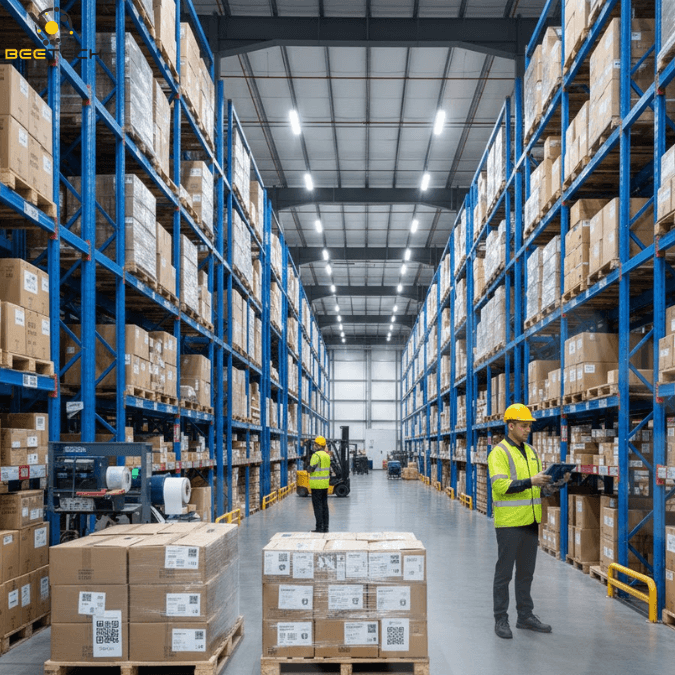
Amid rapid digital transformation, emerging technologies such as RFID, QR codes, IoT, and blockchain are increasingly discussed in supply chain management. However, in practice, barcodes remain the most widely used automatic identification technology in Vietnam and worldwide, particularly in retail, warehousing, manufacturing, and logistics.
More than simply surviving, barcodes are being continuously optimized and more deeply integrated into management systems, serving as a foundational tool for data standardization and operational efficiency.
According to statistics from the retail and logistics sectors, over 90% of goods circulating in today’s markets still rely on barcodes. The continued dominance of barcodes is driven by several practical advantages:
Low implementation costs
Global standardization (EAN, UPC, Code 128, Code 39, etc.)
Ease of use and maintenance
Suitability for businesses of all sizes
For most small and medium-sized enterprises in Vietnam, barcodes remain the most effective starting point for digitizing management processes, before expanding into more complex technologies.
Previously, many companies used barcodes at a basic level—printing labels for scanning during inbound and outbound warehouse operations. Today, the trend has shifted significantly, with barcodes being directly integrated into warehouse management systems (WMS), point-of-sale systems (POS), and ERP platforms.
Each barcode scan is no longer just a technical action, but a data event, enabling businesses to:
Track product history
Reduce manual errors
Update inventory levels in real time
As requirements for product transparency continue to increase, barcodes play a critical role as:
Product identifiers
Batch and lot codes
A bridge between physical goods and digital data
Many enterprises use barcodes in parallel with QR codes—barcodes for internal management, and QR codes for consumer-facing information.
Rather than moving directly to RFID, most businesses adopt a phased implementation approach:
Standardize processes using barcodes
Standardize data and systems
Expand RFID in areas requiring higher levels of automation
This strategy helps reduce investment risks and ensures stable system operation.
Inbound and outbound inventory management
Tracking product locations
Reducing order processing errors
Managing work-in-progress items
Batch-level defect traceability
Tracking components and production processes
Fast checkout and payment processing
Synchronization of online and offline inventory
Sales data analytics
Managing returnable containers and beer kegs
Controlling raw materials
Reconciling inbound, outbound, and returns
Within Vietnam’s AutoID ecosystem, Beetech is recognized as one of the companies providing barcode and RFID solutions, supporting enterprises from hardware deployment to software integration.
Rather than offering fragmented solutions, Beetech adopts a comprehensive approach by:
Analyzing real operational workflows
Advising on suitable barcode standards and devices
Integrating barcodes with management software
Building long-term technology expansion roadmaps
The barcode solutions implemented by Beetech are often positioned as a foundational layer, helping enterprises standardize data before advancing to higher levels of automation such as RFID.
An increasingly accepted perspective among enterprises is that barcodes and RFID are not competitors, but complementary technologies.
| Criteria | Barcode | RFID |
|---|---|---|
| Cost | Low | Higher |
| Reading method | Line-of-sight scanning | No line-of-sight required |
| Speed | Item-by-item | Bulk reading |
| Best suited for | Detailed control | Large-scale automation |
When combined appropriately, these technologies allow businesses to optimize costs while maintaining scalability.
According to industry experts, over the next 3–5 years barcodes will:
Remain the most widely used technology in retail
Continue to serve as a foundational element in traceability systems
Be used alongside RFID and QR codes
Become more tightly integrated with data analytics and management platforms
Barcodes are not disappearing—they are evolving to better fit the digital ecosystem.
Despite the emergence of many new technologies, barcodes remain a critical foundation for inventory and data management in Vietnam. When implemented correctly and connected to appropriate management systems, barcodes help enterprises:
Reduce errors
Standardize data
Improve operational efficiency
Prepare for future technology expansion
In this context, the participation of local solution providers such as Beetech plays an important role in helping Vietnamese enterprises adopt barcode and AutoID technologies in a structured, flexible, and practical manner.
📧 Email: info@beetech.com.vn
🌐 Website: https://beetech.com.vn


Why is barcode technology still widely used in today’s technology landscape?

28/01/2026 06:45:37
What Makes Beetech’s Asset Management Software Different from Other Solutions?
12/01/2026 03:47:37

Mobile Barcode Scanners: Which Device Offers the Best Value for Money?
08/01/2026 09:42:34

What Is CO CQ? Why Do Businesses Need CO/CQ When Purchasing Goods?
30/12/2025 03:05:55

What Is Vietnam Barcode? Why Are Businesses Required to Register Barcodes?
29/12/2025 06:42:26

Global Barcode Market Experiences Strong Growth: Trends & Business Opportunities
23/12/2025 08:13:52